
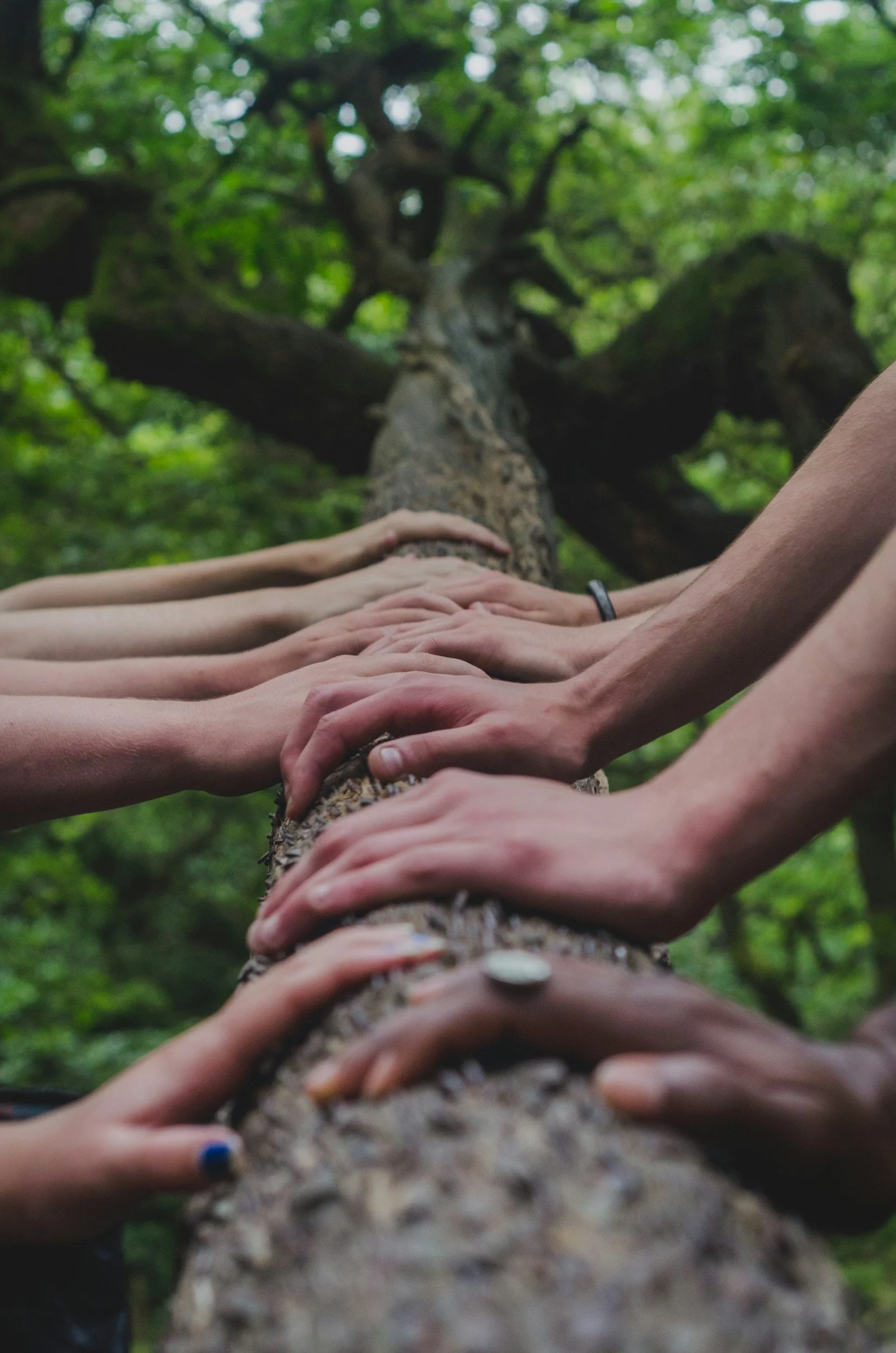
Tolerance is more necessary than ever in these troubled times, when global tensions are on the rise and discrimination appears widespread.
So, to mark the United Nations' (UN) International Day for Tolerance (16 November), it is worth reiterating the Declaration of Principles on Tolerance, which was adopted by UNESCO members in 1995. This Declaration says that:
"Tolerance is respect, acceptance, and appreciation of the rich diversity of our world’s cultures, forms of expression, and ways of being human.”
As such, the International Day for Tolerance reminds us that diversity is a valuable part of society. It asks us to treat everyone equally and to avoid discrimination, prejudice, and hatred.
It reminds us that people may have different opinions, beliefs, traditions and ways of life. But there is value to be gained from respecting and accepting them, not least to ensure the survival of diverse communities around the world.
But it is about more than that too. It is about celebrating our differences and encouraging people from different backgrounds to work together towards common goals. It is about building a peaceful coexistence and supporting equality across the world.
Madanjeet Singh is an Indian artist and writer who had a UNESCO Prize for the Promotion of Tolerance and Non-Violence named after him.
He said: “I do believe that history is not merely a series of accidents. It is a never-ending struggle between the reactionary, divisive warmongers and the people striving to realize their dream to live peacefully in cooperation with each other in a society where men and women love reason, despise hatred and violence, shun darkness, turn towards light and praise virtue – people whose minds are sensitive, whose hearts are generous and spirits free.”
One way of practising such tolerance is by listening patiently to others, respecting their views, and resolving any disagreements peacefully. Another is by helping to promote understanding and respect between people from different backgrounds, encourage peace, challenge discrimination, and celebrate diversity.
But we can also help people in need and do whatever we can to avoid large scale humanitarian crises.
How far away are we from achieving this?
As to how far we are from achieving this ideal, statistics from the International Committee of the Red Cross give us a clue. They indicate civilians are bearing much of the impact of conflict.
More than 204 million people now live in areas that are under full or contested control of armed groups, an increase of 30 million compared with 2021. Looking at three particularly devastating military conflict zones illustrates just how much tolerance is decreasing.
In Sudan, ongoing struggles for political and military control are leading to civilians bearing most of the brunt. Almost nine million people have been internally displaced, while millions more have fled to neighbouring countries.
The 2026 UN plan indicates that about 33.7 million people now require humanitarian assistance. Food shortages and famine are affecting parts of the country. Healthcare, clean water, education, and other basic services have been severely disrupted.
The ongoing destruction of Gaza, the repression of Palestinians in the West Bank, the military attacks on Libya and other surrounding countries by Israel is another example of ongoing intolerance and violence.
Since October 2023, more than 72,000 Palestinians have been killed by Israeli forces and the World Health Organization estimates that more than 43,000 are living with life-changing injuries. A further 4,000 have been displaced in 2026 alone by demolitions, evictions, and settler attacks. In other words, people are living without safety and security, and in many instances food, water, and housing in Gaza, and increasingly in the West Bank too.
Russia's war in Ukraine is another example of how distant a dream tolerance is for many people today. Some 16,000 civilians had been killed and more than 46,500 injured since February 2022 when the conflict began. The overwhelming majority of these casualties, which have been verified by UN personnel, occurred in Ukraine.
What can be done?
Such conflicts require more than simply calling for peace and tolerance. There needs to be activity to address the violence, protect civilians, challenge injustice, hold forces to account, and tackle the conditions that allow such brutality to continue.
The central question here is: how can ordinary people, governments, and international organisations turn concern into meaningful action? While this is something that still needs to be worked out globally, practicing tolerance and supporting diversity is undoubtedly what keeps our planet alive today. It might even be one of the most vital ingredients for our survival as a species.
In other words, civilians must not be treated as expendable just because of their ethnicity, skin colour, religious preferences, or political leaders.
To make this vision a reality, the issue needs to be discussed in every institution, from kindergarten to university and from village council to government.
Another way to make a difference is by providing practical support, exerting public pressure, and making clear demands. This includes joining peaceful demonstrations, supporting humanitarian organisations, and holding governments to account.
One example here in the UK is trying to stop arms exports to Israel, or indeed arms exports altogether. It also means objecting to the Government treating protestors against Israel’s behaviour as criminals.
Sacred Earth Activism’s response
Sacred Earth Activism (SEA) supports non-violent peace actions and movements, whether undertaken by individuals or organisations. We back ‘against’ activity, which includes marches, talks, demonstrations, and campaign demands. To this end, we hold rituals and ceremonies and offer talks against destructive actions.
But we also create and hold ceremonies and host talks that focus on a positive vision of what we wish to manifest. The aim is to dream awake the world we want to see and help co-create it as it emerges.
As SEA's co-founder Jonathan Weekes pointed out in a recent article: "Our rituals do not always need to be gentle, peaceful, or about sending out positive energy. They can be fierce, active, directed, and resistant. We can name what we stand against as well as what we stand for."
Being tolerant takes ongoing work, thought, and communication, but the UN's Day of Tolerance reminds us to celebrate doing so with both respect and integrity.