From ripples to waves: How collective action can save our rivers

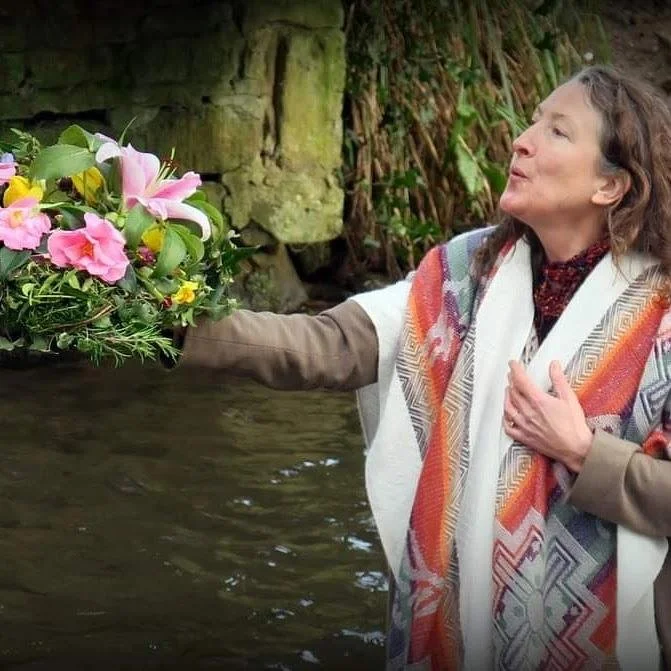
Future for Water River Festival - participants placed flowers and created a nature prayer. Kate Dineen holding the gratitude offering; Monica Feria-Tinta second from left
The health of our waters is the most significant issue of our time.
As a result, to act to protect them effectively in this era of polycrisis, it is vital to move beyond party politics, national borders, and religious differences, and come together to find sustainable solutions. Everyone needs to flow in the right direction.
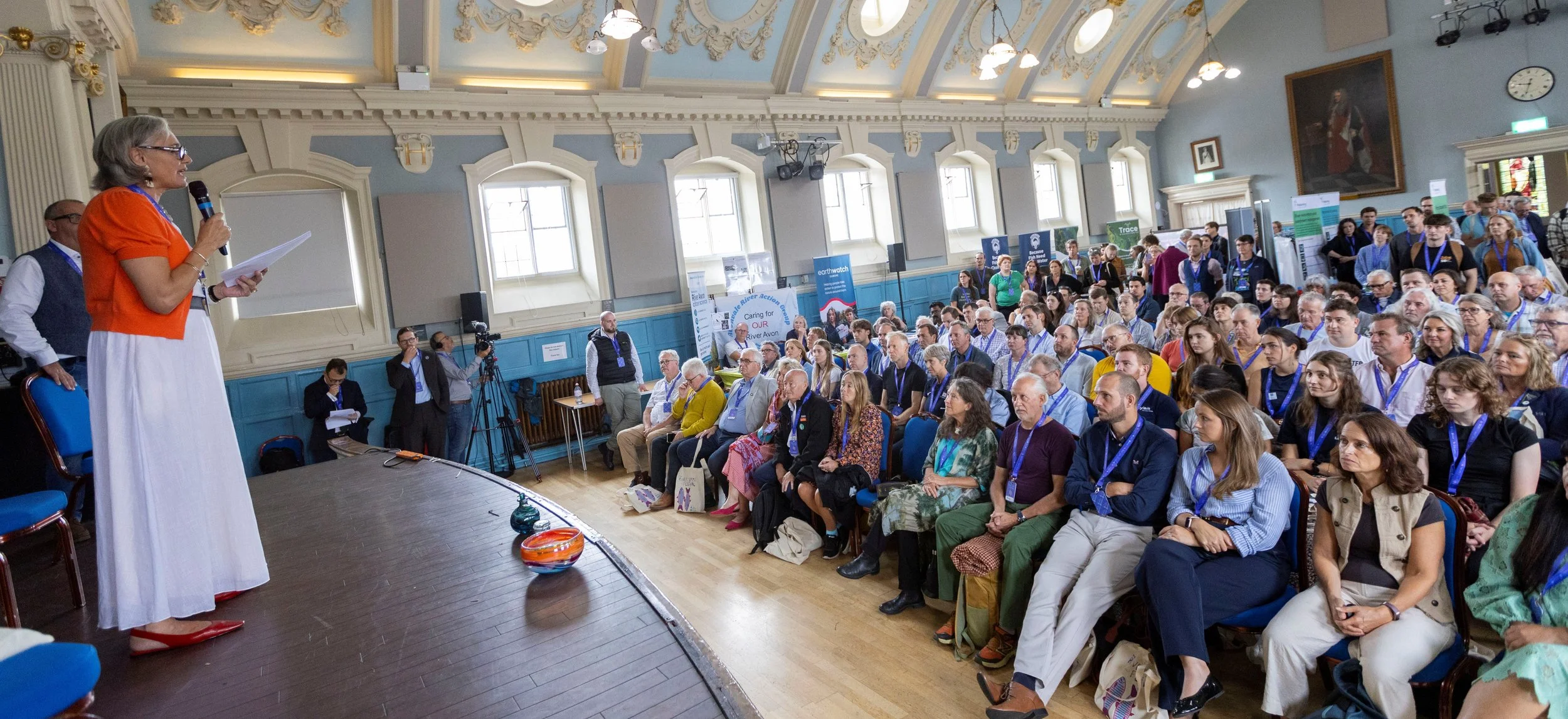
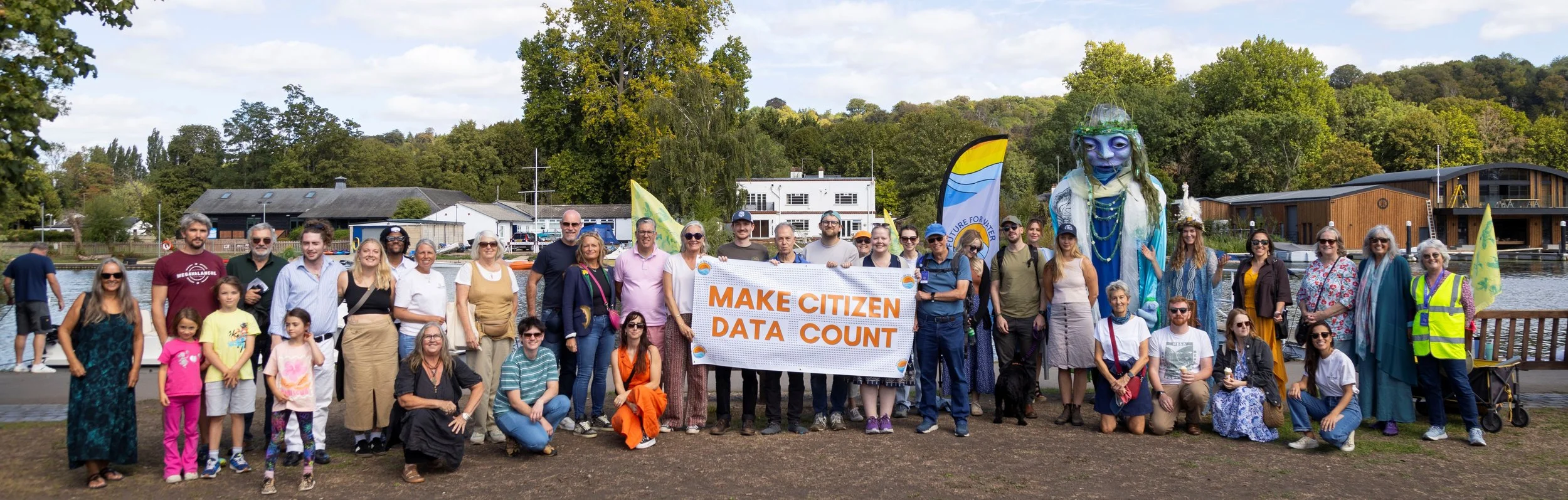
An example of this approach in action was the fourth annual UK River Summit and Festival, hosted by Henley-on-Thames on 4 and 5 September. Attendees flocked from near and far to hear from a diverse array of contributors and share expertise.
Future For Water, led by Claire Zambuni, organised the event and demonstrated what the future could look like if we dropped all the 'me' projects, rolled up our sleeves and got on with becoming river guardians.
This timely event included a refreshing discussion among three Members of Parliament (MPs): Liberal Democrat MP for Fenley & Thame, Freddie van Mierlo; Labour MP for Earley & Woodley, Yuan Yang, and Conservative MP for Windsor, Jack Rankin. They won the audience over by dropping egos, platitudes, and party agendas to have an honest discussion, calling for action on sewage pollution by water companies.
Lawyers for Nature also made an inspiring and entertaining presence. They spoke about how powerful it was to give nature a voice in boardroom decision-making.
Monica Feria-Tinta, author of A Barrister for the Earth, spoke eloquently about the Rights of Nature. She indicated that humanity needed to shift its consciousness from power over to collaboration with nature. This shift in thinking would, in turn, ripple upstream into law and government policy, ultimately changing how we treat our rivers, she said.
Not fit for purpose
Former detective superintendent of Thames Valley Police Ash Smith, whose decade-long investigation with former UCL Professor Peter Hammond inspired Channel 4’s Dirty Business drama, is in my opinion a national hero. Their exposure of negligence and corruption in the water industry, coupled with the Environment Agency's (EA) cover-up, rightly sparked a national scandal.
This work woke many of us up to a need to renationalise and take back control of our water from greedy corporations and international financiers who buy and sell water debt with minimal or no investment in infrastructure maintenance.
Certainly, Smith did not mince his words about the situation. He pointed out that, despite the outrage caused by 'Dirty Business', the situation is still no better. He claims the Government is still lying to the British public, and the water companies are still getting away with defrauding water rate payers.
This issue inevitably affects every water rate payer, every wild swimmer, and everyone who drinks it - not to mention all the wildlife whose lives depend upon having access to clean water. While Smith acknowledged there are good people working for the water companies and EA, he believes the structures they work within are currently not fit for purpose.
Another event at the Summit, the 'Regulating the Rivers for the Future' panel, discussed the Clean Water Bill. This was announced by the UK Government in the May 2026 King's Speech, with the aim of overhauling the water sector, cracking down on pollution, and reforming current industry regulation.
Representatives from the EA, former regulator Ofwat, and the Wildlife and Countryside Link coalition of 97 environmental and wildlife organisations also talked about the proposed new water regulator. Other topics for discussion included the importance of having both collaboration and proper investment across the sector as well as the need to enforce action against breaches and rebuild public trust in regulation.
The power of people
Another panel, this one entitled 'Power of People', included Ash Smith (Windrush Againt Sewage Pollution); Lizzie Carr MBE (Planet Patrol), Professor Becky Malby (Ilkley Clean River Group), and Clifford Roney (GMB Union).
Roney spoke about how water company employees tend to bare the brunt of the public's anger rather than corrupt management. But he pointed out, they are not actually the problem, especially as it is they who are working hard to "keep the taps running".
My biggest takeaway from this session though was the importance of:
Mapping: getting to know the infrastructure in your river, which includes sewage pipes
Testing: assessing water quality and logging the data in a politically neutral place
Monitoring: recording the presence of fish, invertebrate, mammal, bird species etc, whose lives depend on the river.
In Malby’s view, such data gathered at a national level would provide the evidence required to drive political change. In fact, she called for government action to deliver systemic change at scale. Citizen science is vital here, she believes, as it can provide watertight (!) proof of the benefits of bringing the industry back into public ownership.
As such event organisers Future for Water are well named as they gave us a glimpse of the future. This includes 'thinking global and acting local'. By coming together as water guardians to gather data and add it to a growing database of evidence, the hope is the Government will do the right thing and overhaul the water industry.
Another key takeaway, meanwhile, was that, as individual consumers, we will all increasingly need to reduce consumption of, well, everything, but especially water. This is because so many industrial processes use such large amounts of it, whether creating a pair of jeans or cooling a data centre.
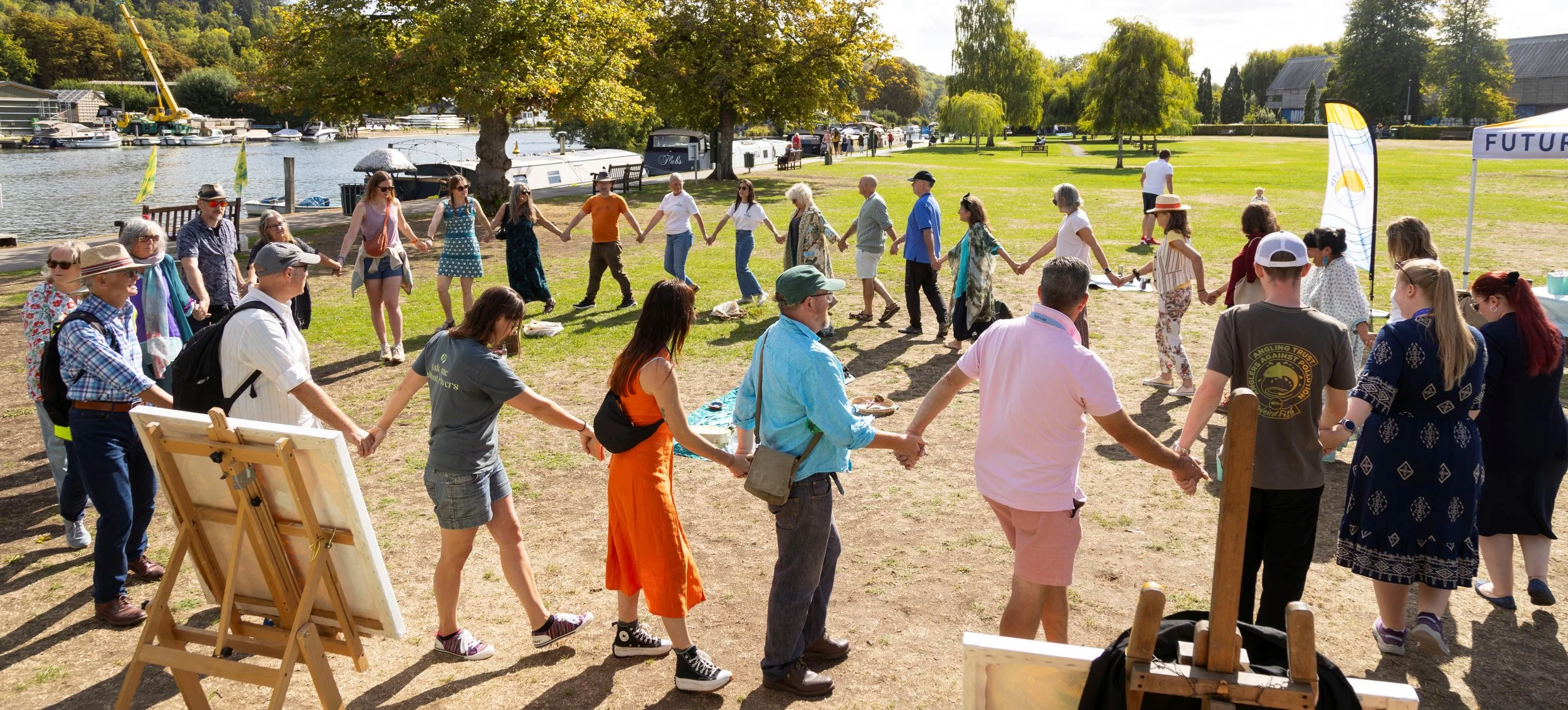
Future for Water River Festival opening ceremony led by Kate Dineen
The power of ceremony
But the Summit was not all purely intellectual. Ceremony had an important role to play too. Lorien Cadier, a celebrant for the Order of Bards, Ovates and Druids, Mary Manandhar, convener and facilitator for River Hope, Mike Blackmore, head of operations at the Wessex Rivers Trust, and I, were all invited to open and close the day. We spoke of the rivers through the lens of the four Directions.
It was affirming to be in a town hall setting alongside scientists, lawyers, artists, politicians, campaigners, and people from many other walks of life, and to have the sacred aspect of water received with such warmth.
It was also a huge honour to lead the opening ceremony for the Festival the following day next to the river Thames. The event, which was open to the public, was an eye-opener for some who had never attended a river ritual before and were touched by it. It illustrated the power of ceremony, which is assuming an increasingly important place in the river guardianship movement, alongside politics, the law and citizen’s science.
Afterwards, Feria-Tinta and others spoke about the Rights of Rivers and the need to protect them. The Goddess of the Wye and Lady Wye also made an appearance, adding to the riverside spectacle as they invited people to become river guardians.
Taking action at the individual level is essential and the Summit repeatedly made clear the importance of people power. Fine illustrations of this include not only researchers like Ash Smith but also the astonishing example set by rights of nature campaigner, guardian of the River Roding and barrister, Paul Powlesland.
Telling new stories about rivers through film - the Rivers of Film festival curated by James Murray White on the evening of Friday 4 September was wonderful - poetry, and artwork, and experiencing the river in new ways through ritual and ceremony, were all equally powerful.
Becoming a river guardian
From my own research, it is clear that our lives are interdependent with those of our rivers, which consist of the entire catchment they flow through: the hills, springs, valleys, trees, stones, aquifers, rains, plants, grasses, hedges, four-leggeds, winged, finned and furred. It even includes things like sewage outlets, road and agricultural run-off, and industrial excretion.
As a result, it is essential that the water companies, industry, farming, the EA, Government, legal bodies, and non-governmental organisations all behave as if they are in service to the living beings we call rivers. So, whether you are a swimmer, a walker, a litter-picker, a scientist, artist, poet, singer, ritualist, or lawyer, making your voice heard is vital, and welcome, within the river guardianship movement.
As such, it is worth noting that World Rivers Day is coming up on Sunday 27 September. All over the UK and around the world, local communities will come together to celebrate and honour their rivers and empower each other in becoming river guardians.
This would be an ideal opportunity to show your waterways some love. Reach out to your local community, meet by your river and discuss campaigns for collecting citizen science data, litter-picking and other river-loving activities.
If you happen to be near Stroud in Gloucestershire, we plan to meet at Capel’s Mill at 10:30am to celebrate the day. A short walk away at the bottom of Rodborough Fields, the aim is to hold a 'River Frome Celebration'. Everyone is welcome so bring a flower, some water, a drum, poem, story, song, or some snacks to share as we come together to work out how best to pool our talents and protect our beautiful river.
If you’re near Bewdley in Worcestershire, the rights of the River Severn will be declared during an event from 3pm-6pm on the same day. I will be at both happenings so look forward to seeing you there.
Alternatively, if you live near Arlingham in Gloucestershire, the Sacred Severn community collective intends to hold an event to celebrate the river that Sunday morning too. Should you be based elsewhere though, there will undoubtedly be alternative events being held near you - or you could even create one yourself!