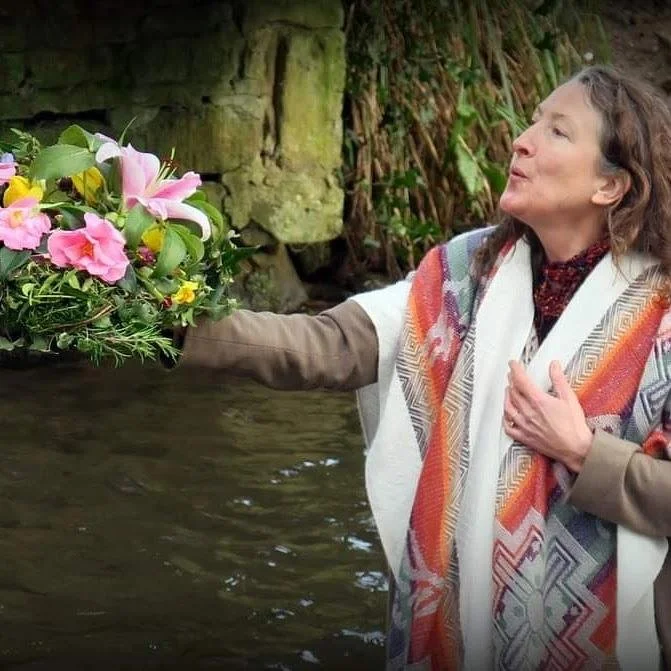
Experiencing animism in practice at an Imbolc River Blessing
Photos courtesy of the Bards of Avalon
A recent Imbolc Blessing for the River Frome in Stroud included sacred teachings from indigenous wisdom keepers, whose unbroken connection with nature offer us a map back into right relationship with the web of life. Imbolc is also a time to honour Brigid, ancient fire Goddess of poetry, healing and smithcraft.
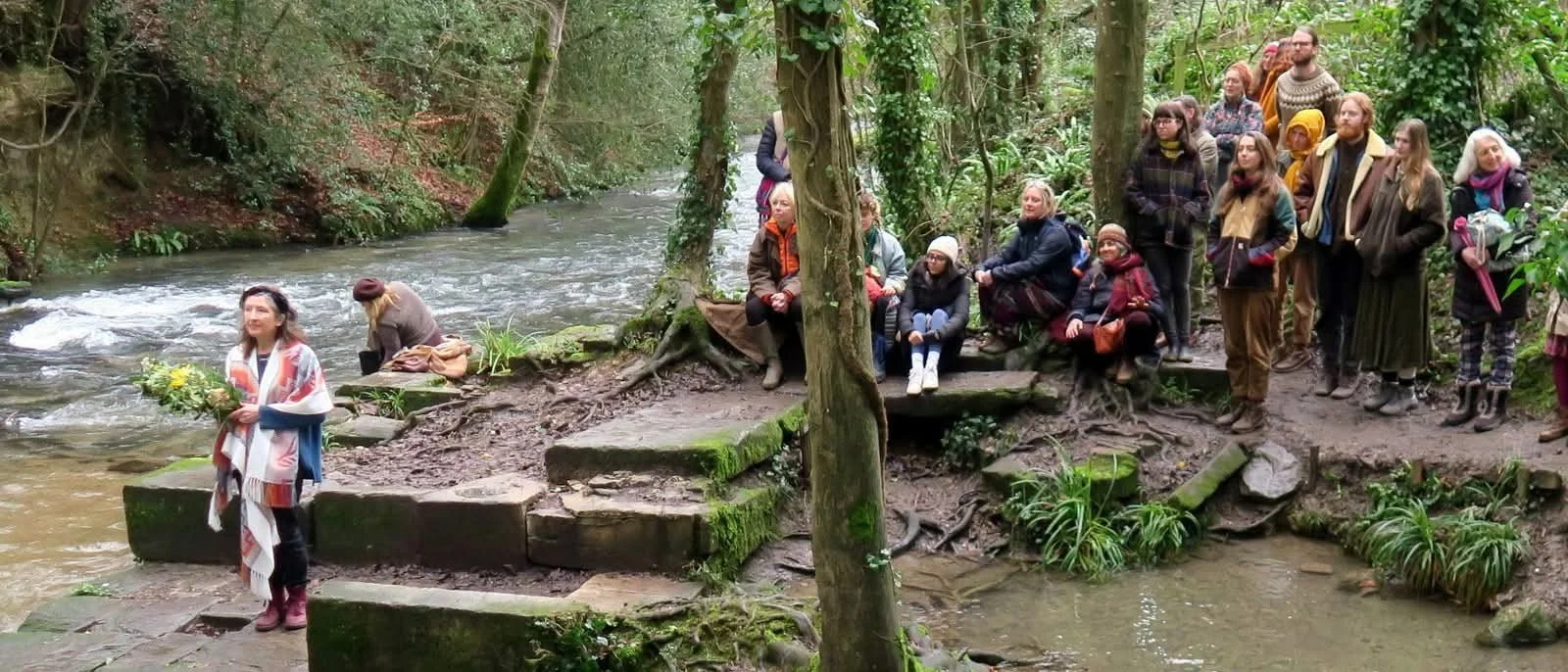
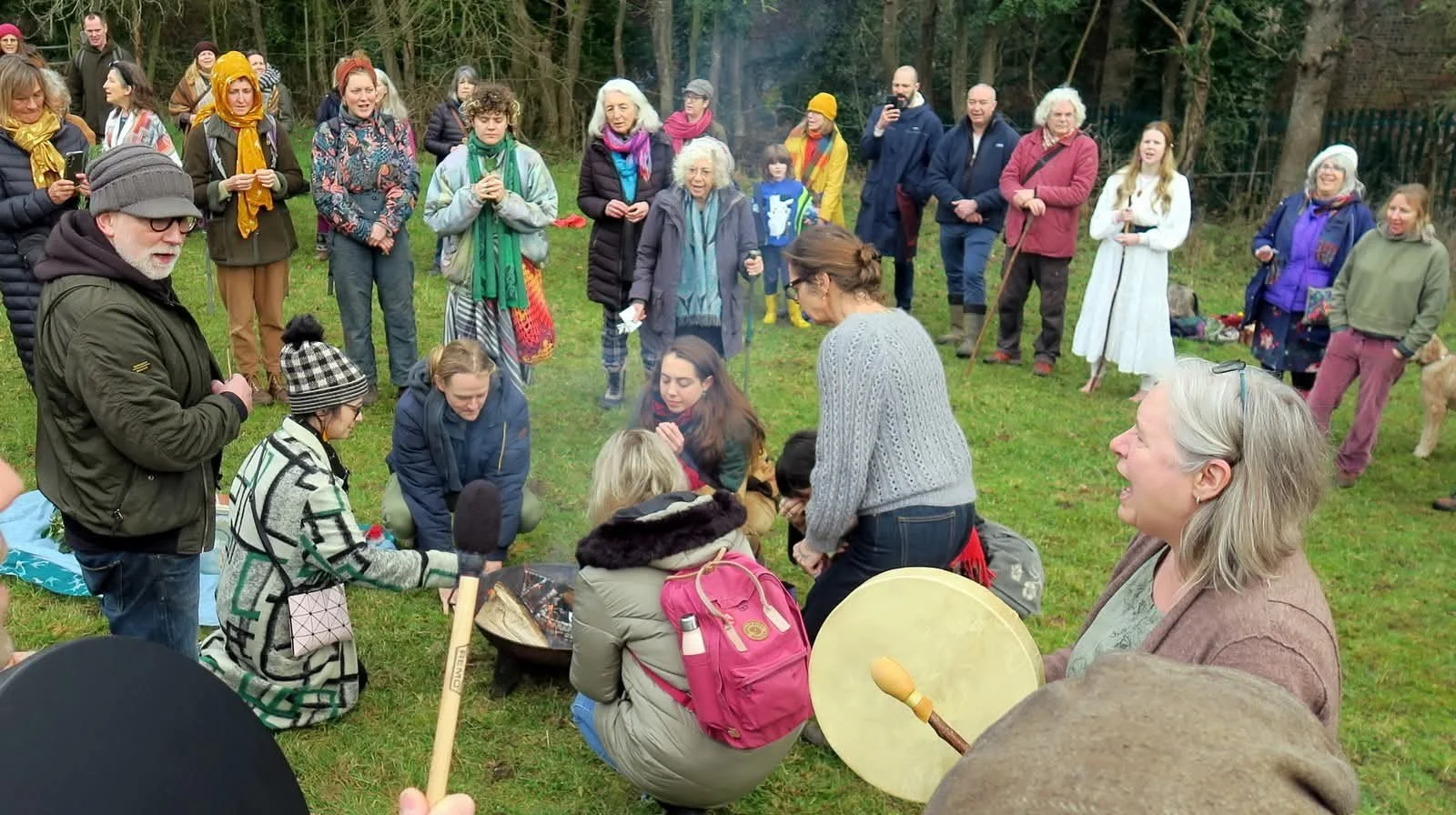
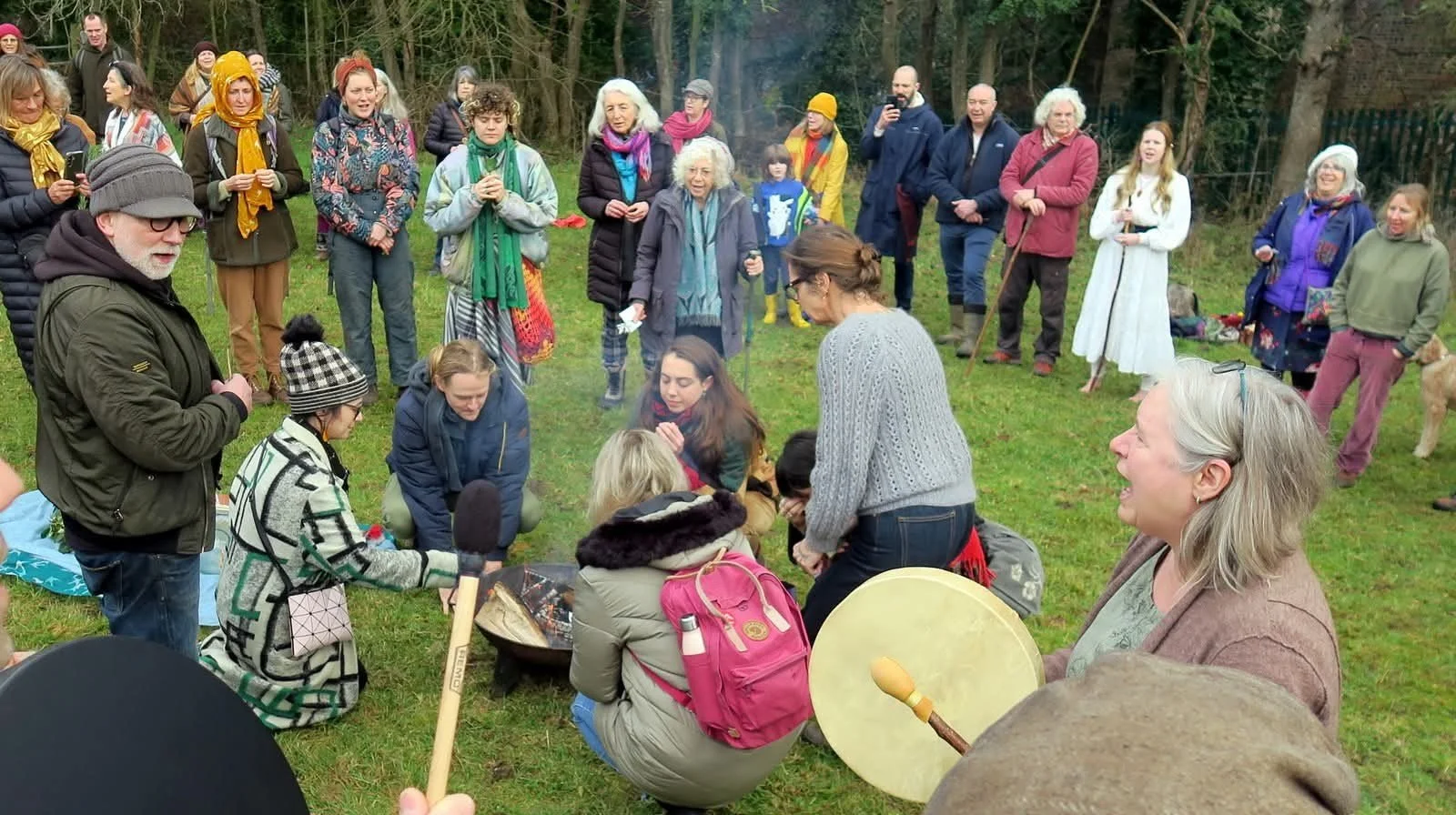
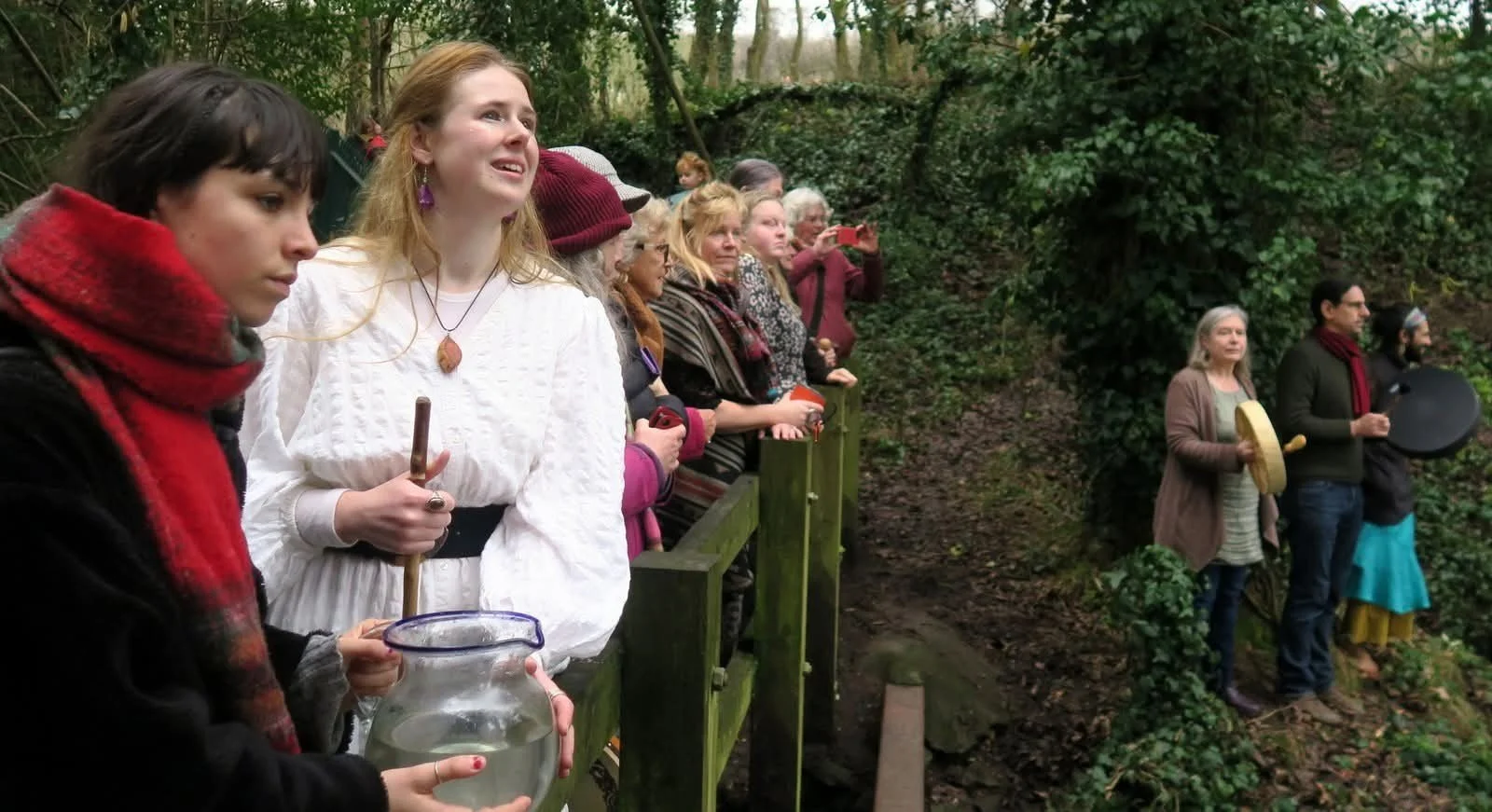
Some 85 people of all ages and walks of life attended the multi-faith ceremony on Sunday 1 February. They included councillors, artists, and engineers, all coming together out of gratitude to the water and concern over the state of the UK’s rivers.
The River Blessing, held in a field within hearing distance of the river Frome, was a form of sacred action to support Mother Earth and all of life. A key aim of such activities is to help participants shift their attitudes from one of extraction from Nature to being in relationship with her.
I began the blessing by asking everyone to name their favourite body of water and by stating that the time had come to apologise to our waters, to thank them, to say ‘I’m sorry’ and ‘I love you’ to them.
Photos courtesy of the Bards of Avalon
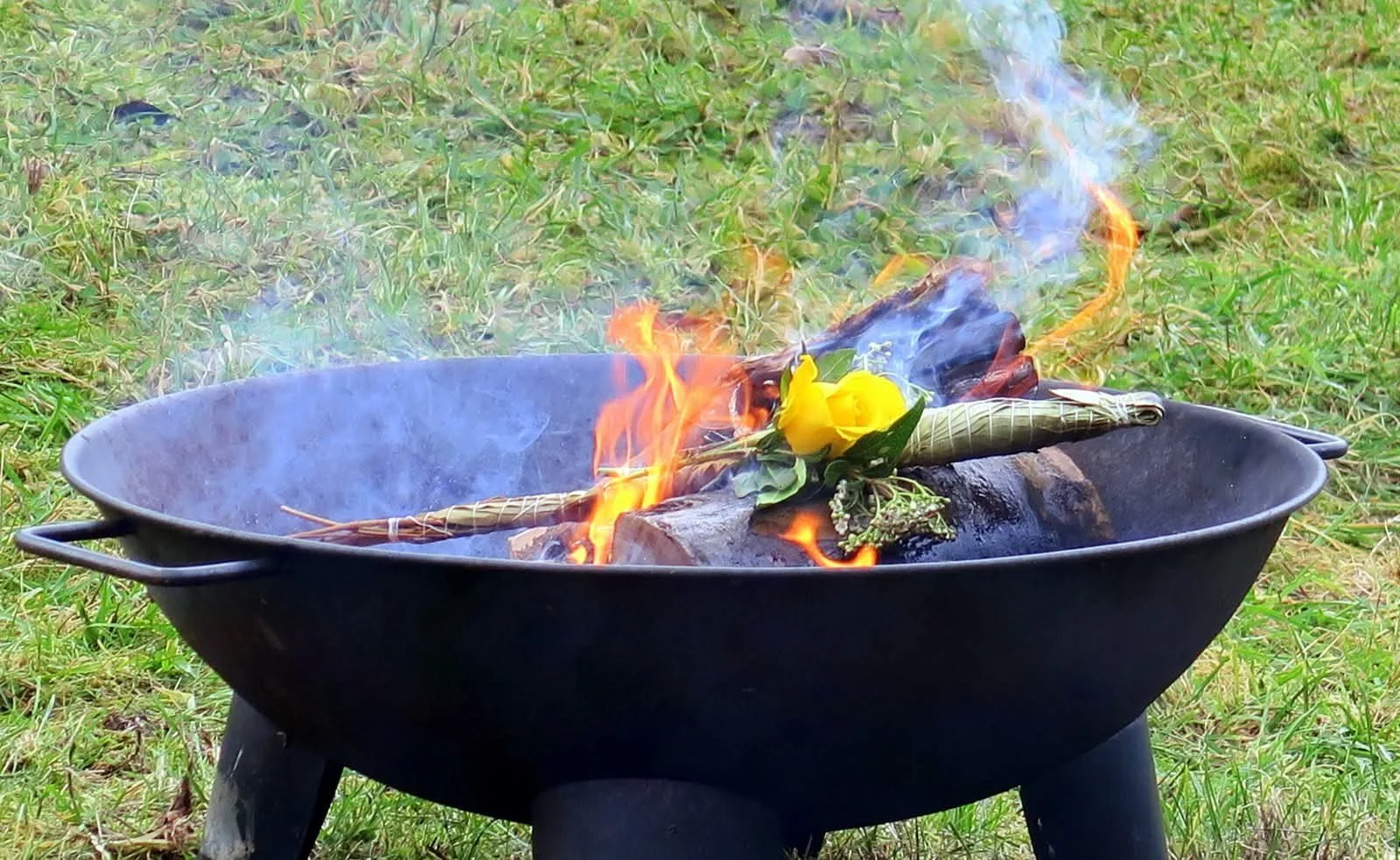
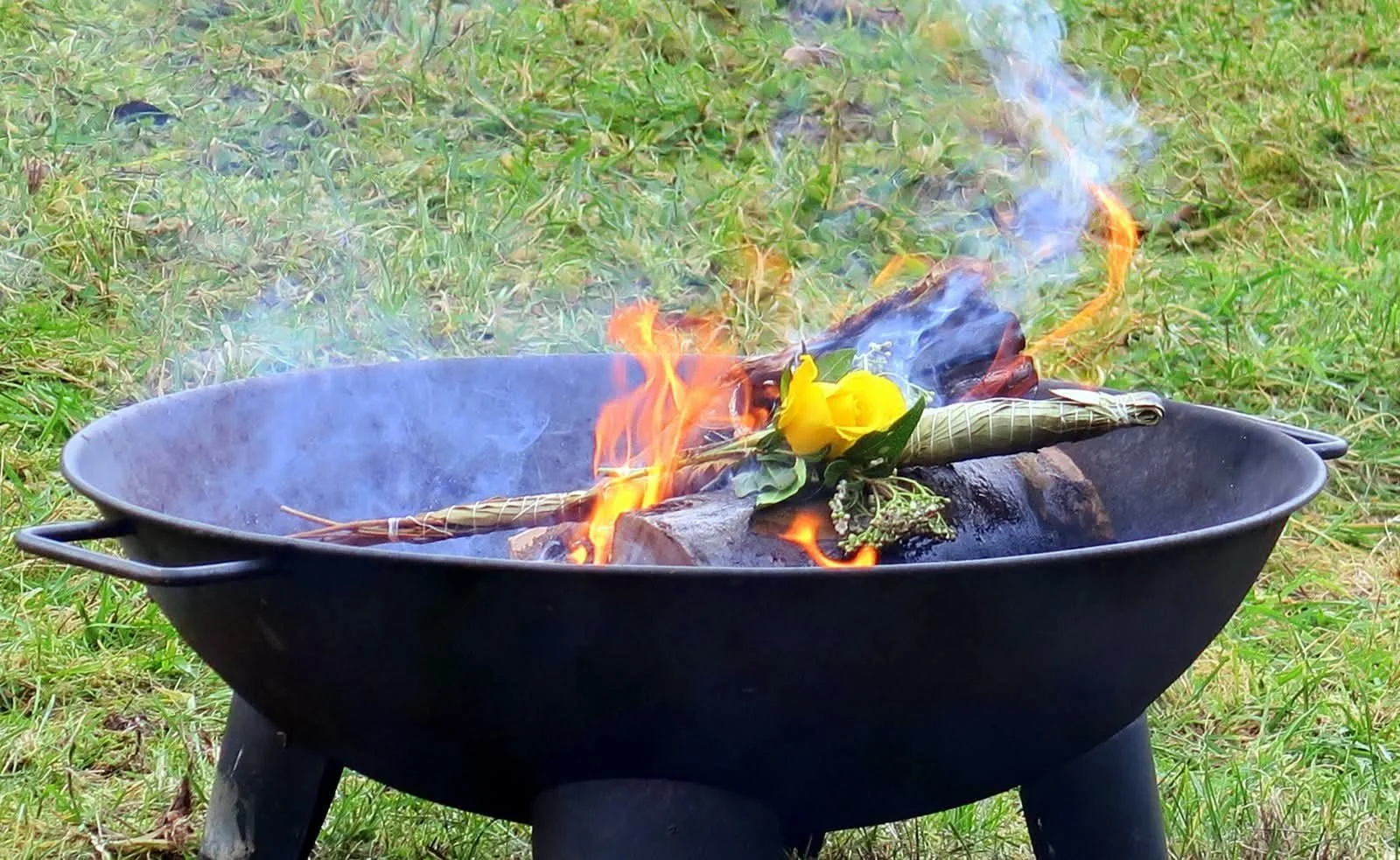
Next came a Fire Ceremony, based on the tradition of Eduardo Calderon, a legendary healer and seer from the north coast of Peru, which I am initiated into. People were invited to offer any grief or anger at the state of our rivers to the sacred fire and, in return, to draw on its warmth to enable their ‘seed essence’ to grow as they move forward.
Creating a living prayer
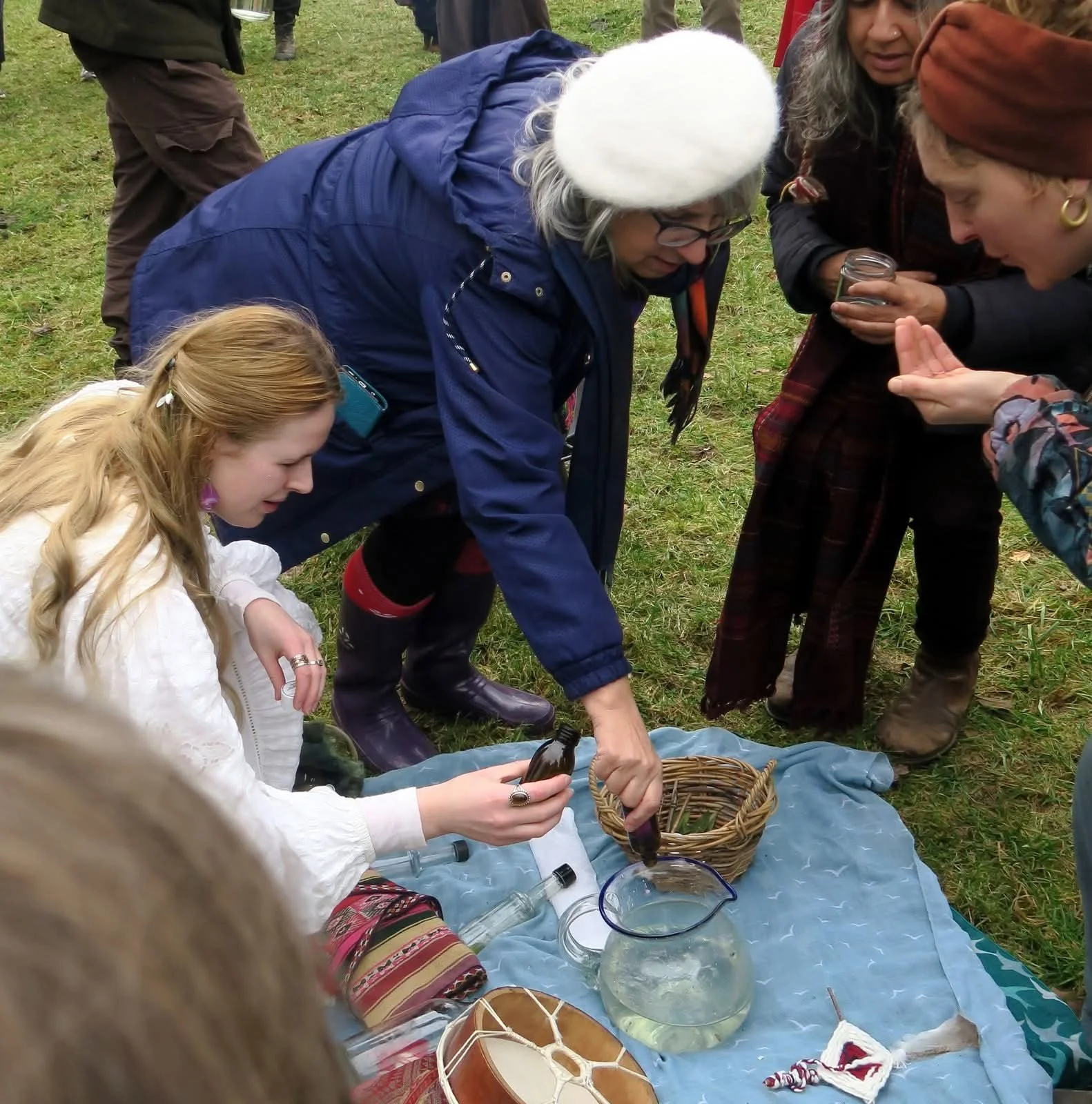
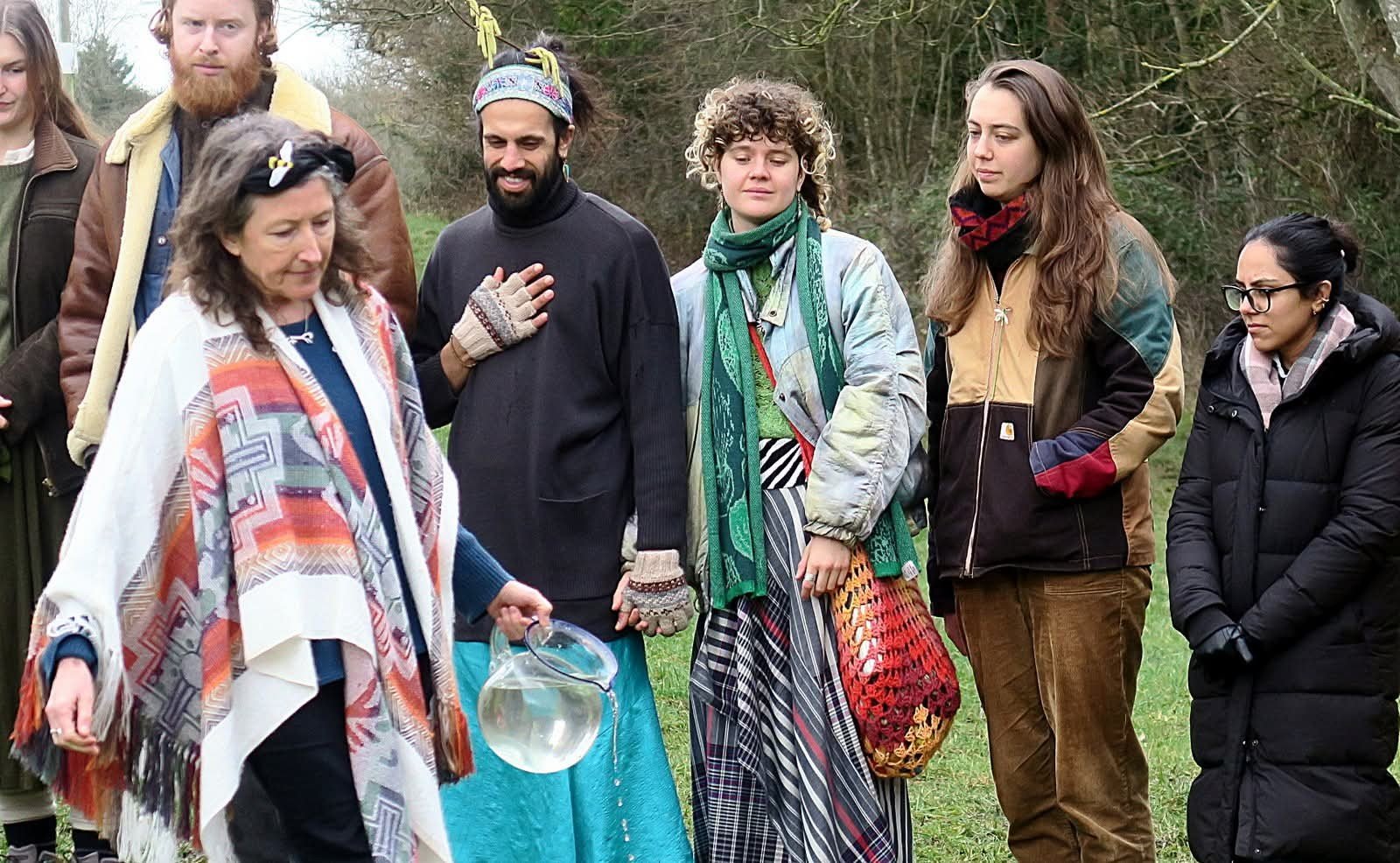
The next step was to create a living prayer together. Each participant poured the water they had brought from their local area into a collective jug, before placing a flower onto a wreath offering I had woven from local branches. At the same time, we sang a song (which I adapted from JJ Middleway) called ‘I am water, that is all that I am’.
This weaving of the prayers and energies from everyone present was inspired by another tradition I am initiated into: the despacho ceremony. This is one of the oldest forms of conflict resolution in South America and one that I learned from my teachers in Hatun Q’eros.
I then told the story of meeting indigenous activist Shirley Krenak in November 2021. A friend brought her to the Roundhouse music and arts venue in Chalk Farm, London, following her attendance at COP in Glasgow to talk to an audience of 400. The gathering consisted of everyone from artists and musicians to journalists.
My aim in telling her story was to acknowledge the impact she had on all of us that evening when she invited us to say: ‘I am Watu’ (a sacred river where she lives in Brazil). Shirley described how the Krenak tribe’s whole identity and way of life is completely woven into their river.
They grew up playing, washing, cooking, drinking, and swimming in it, until 2015 when the Samarco mining dam collapse severely contaminated the entire Rio Doce valley. The Krenaks were forced to adapt and change their entire lifestyle as a result – although Shirley made it clear that even though the river Watu was poisoned, they still identify strongly with her.
I am Watu
Photos courtesy of the Bards of Avalon
At the same time, Shirley also made it plain to the audience that: “We don’t need your help. We’ve had your help for the past 500 years. We need you to listen to us. We are looking after the biome for your children as well as our children”.
She then said: “I am biome” and asked everyone to repeat it back to her, followed again by: “I am Watu”. The atmosphere in the Roundhouse was electrifying at this point, and as Shirley said: “That makes you feel powerful”.
As a result, I repeated her invocations at the River Blessing. At every Blessing and Extinction Rebellion action, I likewise always ask participants to name their favourite waterway by saying “I am river X”.
Doing so signals a profound shift in our usual attitude towards these sacred bodies of water: it is an invitation to embody our local rivers, and an acknowledgement that, in a very literal sense, we are the rivers whose waters course through the land we live on.
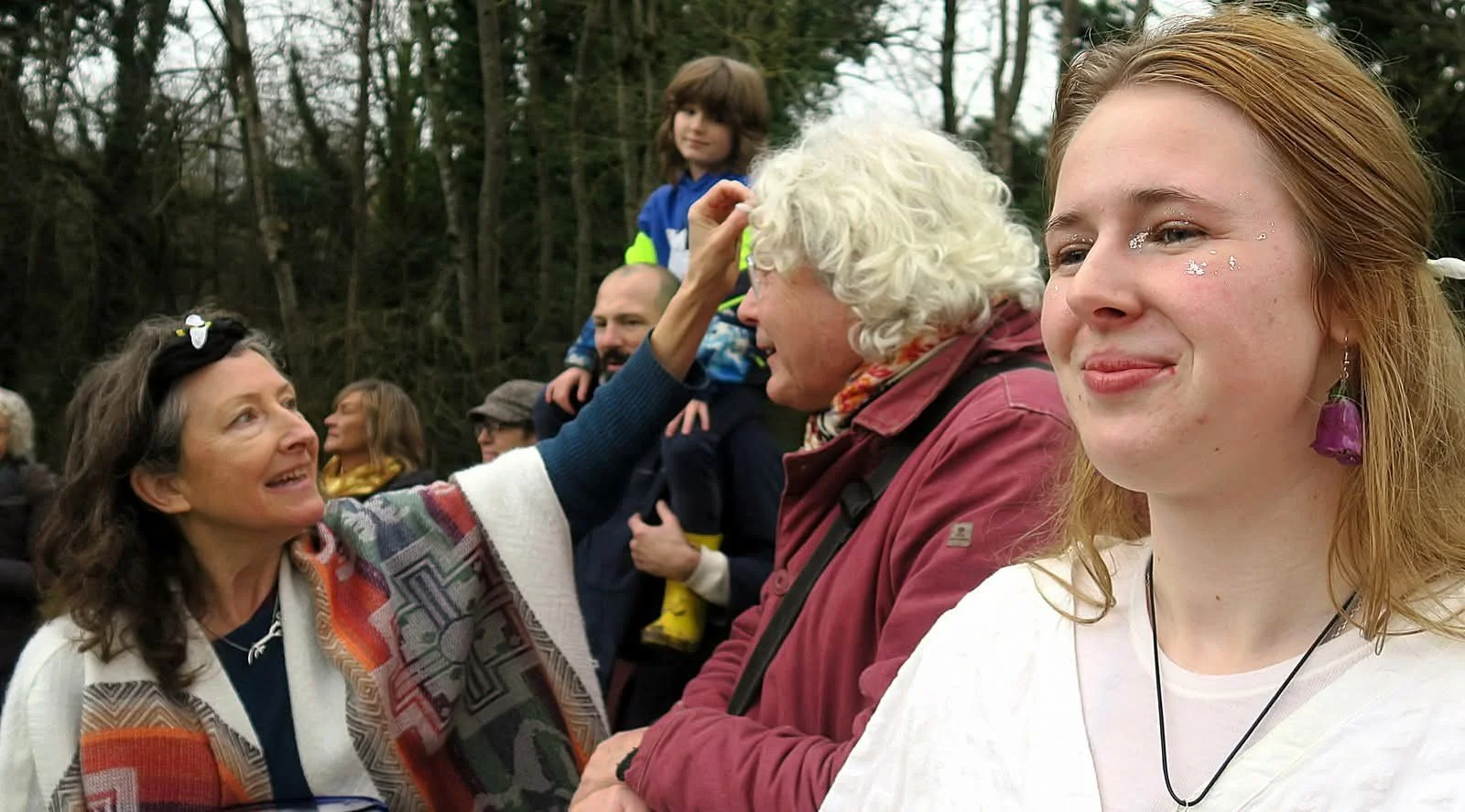
To close the ceremony and honour Shirley and my Q’ero teachers, we sang a Q’echuan song, which translates to ‘Oh mother of the waters who brings us into life and carries us through’. While singing it, I offered some of the collective water that held our prayers to the land, before anointing each participant with it.
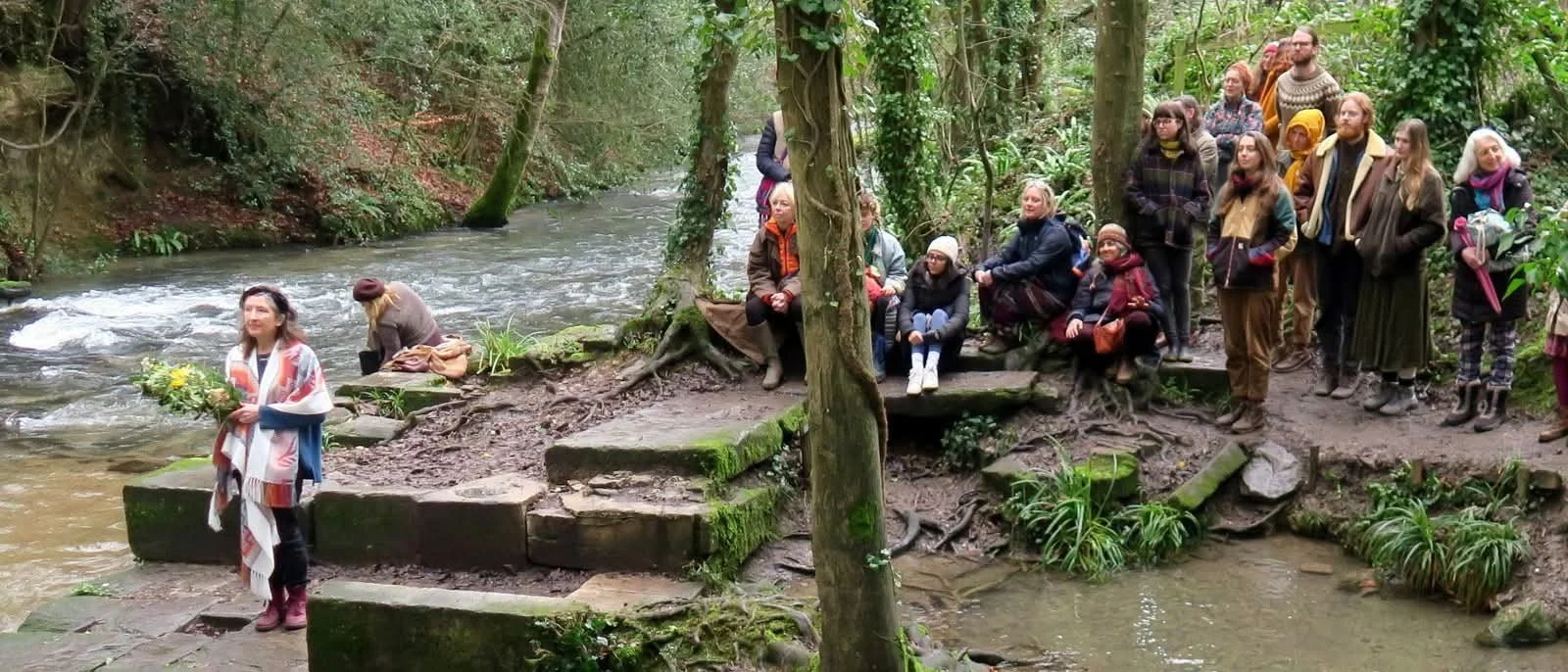
Finally, after processing down to the river Frome, two of the youngest participants, Tara and Luna, poured the rest of the water into her. I likewise cast the flower offering into river Frome to carry our collective prayers out into the waters of the world.
Paying homage to indigenous wisdom
The ceremony was special in that it provided participants with an opportunity to experience animism in practice. They were deeply moved by the experience and, in fact, for some it was life changing.
As Robin Layfield wrote in local online news publication Amplify Stroud: “There is real power in a ritual and it felt vividly like we were all part of a spell that was woven from all our hopes and fears, and that our collective energy and will was being shared with the land and with the river and with each of us stood there…I came away feeling nourished, refreshed, inspired, and energised by the experience of being part of something so special.”
While it is a truism that anyone can create a ceremony, it is also true that we stand on the shoulders of our teachers. I drew upon the wisdom of my teachers in this ceremony and feel it is only respectful to acknowledge them as essential sources.
It is particularly important to do so in the case of indigenous wisdom-keepers. Their unbroken connection with nature offers a map to help us find our way back to animacy and right relationship with the living web of life.
I also strive to weave their wisdom into a deeper understanding about our prehistory and our ancestors’ natural spirituality here in these lands. It is my distillation of this wisdom that allowed me to share an authentic experience of animism. This made the ceremony accessible and meaningful to newcomers, some of whom had never been to an event quite like this before.
It pointed a way to possible culture change, which is what will be required in future if laws are to be enacted in a sustainable way. With these sacred indigenous lineages at my back, I always feel supported and protected in leading ceremonies that enable a return to oneness with All That Is and the power of Mother Earth and her sacred waters. Potent experiences are born out of a depth of understanding, and it is our indigenous brothers and sisters who I thank for this wisdom from the bottom of my heart.
Photos courtesy of the Bards of Avalon